📘 Explainer · June 5, 2026
AI Capex Supercycle: Will the Momentum Persist?
In the first quarter of 2026, Alphabet, Amazon, Meta, and Microsoft alone deployed $130.65 billion in capital expenditures — more than three times the cost of the Manhattan Project in inflation-adjusted terms and 71% above the prior-year quarter.
In the first quarter of 2026, Alphabet, Amazon, Meta, and Microsoft alone deployed $130.65 billion in capital expenditures — more than three times the cost of the Manhattan Project in inflation-adjusted terms and 71% above the prior-year quarter. Full-year guidance from the group now clusters around $650–725 billion, a 60–77% increase from the already record $388–410 billion spent in 2025.
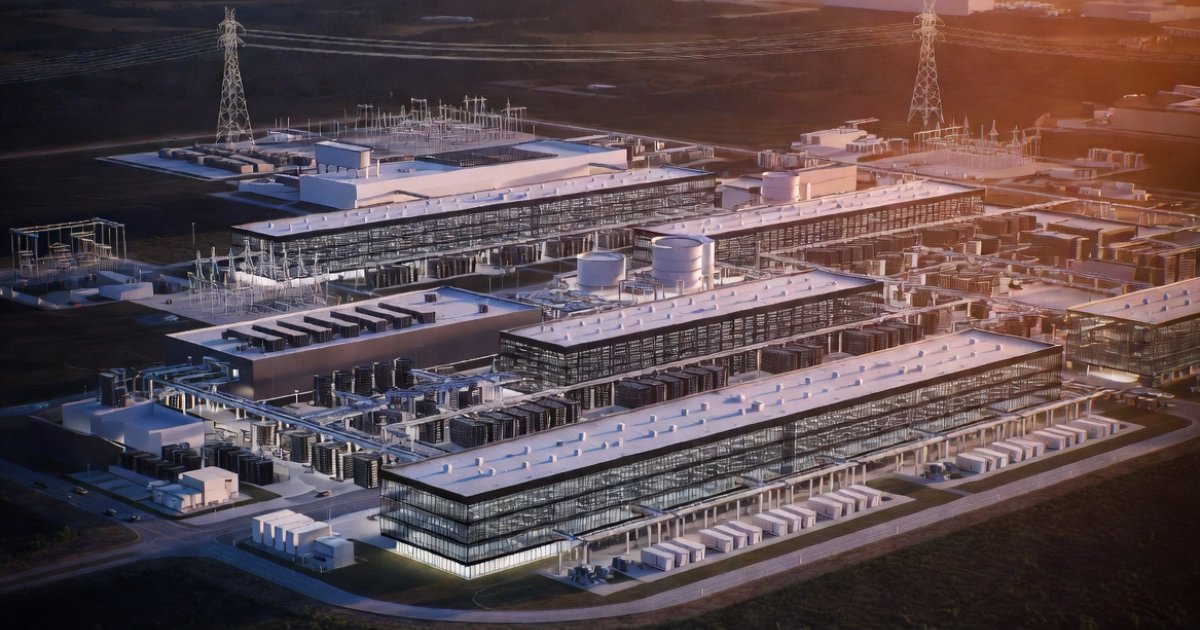
This is not incremental investment. It is the largest concentrated infrastructure build-out in corporate history, dwarfing previous technology cycles in absolute dollars even if it remains smaller as a share of GDP than the late-1990s telecom peak. The question for investors, executives, and policymakers is no longer whether the money is being spent, but whether the spending can be sustained at anything close to current run rates — and whether the returns will justify it.
The Scale and Trajectory
Company guidance and Wall Street aggregation tell a consistent story of acceleration followed by questions about longevity:
- Amazon: ~$200 billion for 2026.
- Microsoft: ~$190 billion (calendar-year view).
- Alphabet: $175–185 billion (with some forecasts pushing the upper end higher).
- Meta: Raised to $125–145 billion (from an earlier $115–135 billion range).
Goldman Sachs now models $5.3 trillion in combined capex for these four hyperscalers from fiscal 2025 through 2030 (up from a prior $4.5 trillion estimate), with a baseline scenario implying roughly $765 billion in annual AI-related capex in 2026, rising toward $1.6 trillion annually by 2031. Cumulative spend across compute, data centers, and power from 2026–2031 sits at approximately $7.6 trillion under baseline assumptions.
NVIDIA’s results serve as the clearest downstream confirmation of demand. In fiscal Q4 2026 the company posted $68.1 billion in revenue (+73% YoY), with Data Center revenue at $62.3 billion (+75% YoY). Full-year fiscal 2026 revenue reached $215.9 billion. The vast majority of hyperscaler capex flows through accelerated compute, and NVIDIA retains dominant share in the training and high-end inference segments that matter most for frontier model development.
McKinsey’s global analysis points to $5.2–7+ trillion in data-center capex needed by 2030 to meet AI-driven compute demand, with power infrastructure representing a growing share of the total bill.
What Is Fueling the Acceleration?
Three structural forces explain why guidance keeps rising rather than moderating:
-
Competitive necessity and the scaling hypothesis. Frontier model performance has continued to improve with compute, even if marginal gains per additional FLOP are debated. No major player can afford to cede ground on training capacity or inference throughput. Microsoft’s partnership with OpenAI, Google’s internal TPU and Gemini push, Meta’s Llama strategy, and Amazon’s dual role as cloud provider and model host all create powerful incentives to overbuild rather than underbuild.
-
Cloud demand signals remain robust. Azure grew ~40% in recent quarters with an AI-specific run rate cited around $37 billion and +123% YoY growth in one update. Google Cloud has shown quarters of 60%+ growth. AWS continues steady double-digit expansion. AI workloads are not yet the majority of cloud revenue, but they are the fastest-growing component and are pulling overall cloud growth higher.
-
Balance-sheet capacity. These companies generate enormous free cash flow from mature businesses (search, social advertising, e-commerce, enterprise software). Capex-to-operating-cash-flow ratios have risen sharply — in some cases approaching 80–90% versus a long-term average nearer 40% — but absolute cash generation remains sufficient to fund the spend without immediate distress, even as net cash positions fluctuate.
The Monetization and Constraint Challenges
The bear case rests on two linked concerns: the gap between capex and near-term incremental revenue, and physical bottlenecks that money alone cannot instantly solve.
On monetization, AI-attached revenue is growing rapidly from a low base, but it has not yet offset the full marginal cost of the infrastructure build-out for most participants. Meta’s efficiency gains in advertising and recommendation systems provide one clear internal ROI path. Microsoft and Google can point to higher cloud attach rates and pricing power on AI services. Amazon benefits from both its own usage and third-party demand. Still, a material portion of current spend is pre-emptive capacity for workloads (agentic systems, multimodal inference, fine-tuning, sovereign AI) that are not yet at full commercial scale.
The more binding near-term constraint is power. US investor-owned utilities have guided to roughly $1.4 trillion in capex through 2030 to support data-center demand — a 27% upward revision from prior plans. Yet interconnection queues, permitting timelines, and transmission bottlenecks mean that “speed to power” has become the dominant site-selection criterion. Reports indicate that a significant share of planned 2026 data-center capacity faces delays or cancellations due to grid access.
Goldman Sachs’ modeling highlights that the single most sensitive assumption in long-term capex forecasts is the economic useful life of AI silicon (typically modeled at 4–6 years). Shorter lifespans from rapid architectural progress increase replacement cycles and raise cumulative spend; longer lifespans or major efficiency gains at the model or systems level would materially reduce it. Power density, cooling requirements, and data-center construction costs per MW are also rising, adding further upward pressure on unit economics.
Historical Parallels and Forward Path
Past technology capex cycles (fiber in the late 1990s, cloud build-out in the 2010s) eventually transitioned from hyper-growth to more normalized replacement and optimization spending. The current cycle differs in two respects: the absolute scale is larger, and the underlying technology (generative AI and its successors) has broader potential productivity implications than previous waves.
The most probable trajectory is therefore moderation rather than abrupt reversal. Guidance is likely to remain elevated into 2027 as companies work through existing backlogs and as incremental power capacity gradually comes online. The rate of growth in annual capex, however, should slow as the industry shifts emphasis from raw capacity addition to utilization, inference optimization, smaller/specialized models, and software-level efficiency gains that reduce the need for proportional hardware expansion.
Power constraints will act as a natural governor. Where grid access is secured, spend will continue; where it is not, capital will be redeployed or deferred. This dynamic favors companies with strong utility relationships, ability to co-invest in generation, or flexibility to site workloads globally (including regions with surplus power).
Investment Implications
The cycle is not a classic bubble in the sense of purely speculative leverage or nonexistent demand. Real technological progress is occurring, balance sheets are strong, and hyperscalers have demonstrated willingness to invest through uncertainty before (cloud, mobile). Yet the combination of elevated valuations, concentrated market leadership, and a multi-year lag between capex and full monetization creates classic late-cycle risks: disappointment if AI-driven revenue disappoints relative to expectations, or if power and chip-supply frictions prove more persistent than modeled.
The winners will likely be those best positioned to convert infrastructure into durable revenue or cost advantages — diversified cloud operators with enterprise relationships, companies that can leverage AI for core-business efficiency at scale, and suppliers with defensible positions in power delivery, advanced packaging, or networking. Pure capacity plays without clear paths to utilization face higher risk of stranded or under-earning assets.
The AI capex supercycle is not ending in 2026. It is entering a more complex phase in which execution, power infrastructure, and the speed of real-world adoption will matter more than headline spending guidance. The capital is still flowing. The returns are the variable that will ultimately determine how long the current intensity can be maintained.
References
Goldman Sachs. (2026, May 1). Tracking trillions: The assumptions shaping the scale of the AI build-out. Goldman Sachs Global Institute. https://www.goldmansachs.com/insights/articles/tracking-trillions-the-assumptions-shaping-scale-of-the-ai-build-out
Lee, G., & Greenbaum, L. (2026, May 1). Tracking trillions: The assumptions shaping the scale of the AI build-out. Goldman Sachs Global Institute. https://www.goldmansachs.com/insights/articles/tracking-trillions-the-assumptions-shaping-scale-of-the-ai-build-out
McKinsey & Company. (2025, April 28). The cost of compute: A $7 trillion race to scale data centers. McKinsey Quarterly. https://www.mckinsey.com/industries/technology-media-and-telecommunications/our-insights/the-cost-of-compute-a-7-trillion-dollar-race-to-scale-data-centers
NVIDIA. (2026, February 25). NVIDIA announces financial results for fourth quarter and fiscal 2026. https://nvidianews.nvidia.com/news/nvidia-announces-financial-results-for-fourth-quarter-and-fiscal-2026
PowerLines. (2026, April). U.S. investor-owned utility capital expenditure plans analysis. https://powerlines.org/
Weise, K. (2026, April 29). A.I. spending sets a record, with no end in sight. The New York Times. https://www.nytimes.com/2026/04/29/technology/ai-spending-tech-data-centers.html
Additional supporting sources (news roundups on hyperscaler guidance):
CNBC. (2026, April 30). AI boom: Big Tech capital expenditures now seen topping $1 trillion in 2027. https://www.cnbc.com/2026/04/30/ai-boom-big-tech-capital-expenditures-now-seen-topping-1-trillion-in-2027-.html
Yahoo Finance. (2026, June). Meta, Microsoft, Amazon, and Alphabet are about to spend a shocking amount of money to dominate the AI era. https://finance.yahoo.com/sectors/technology/article/meta-microsoft-amazon-and-alphabet-are-about-to-spend-a-shocking-amount-of-money-to-dominate-the-ai-era-115359575.html
Wall Street Journal. (2026, April 14). Utilities plan to spend $1.4 trillion over next five years to power AI boom. https://www.wsj.com/business/energy-oil/utilities-plan-to-spend-1-4-trillion-over-next-five-years-to-power-ai-boom-e91b8f16