📘 Explainer · June 9, 2026
Big Tech Goes Nuclear: Microsoft, Google, and Amazon’s Race to Power AI Data Centers
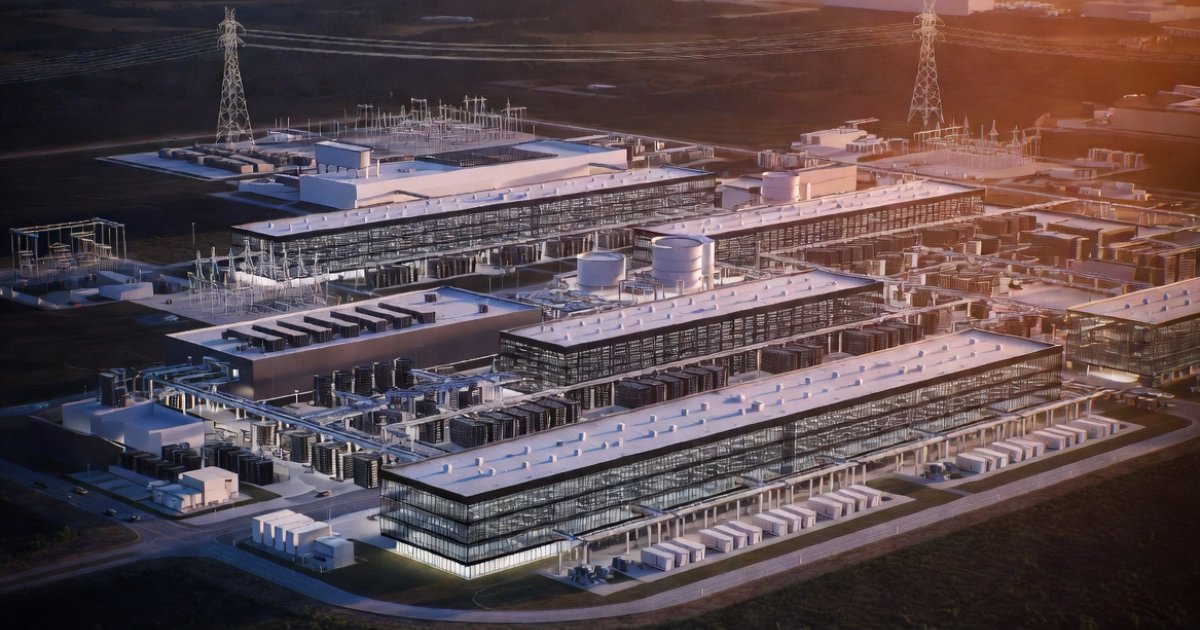
The artificial intelligence boom has turned electricity into the new strategic bottleneck for Big Tech. While GPUs, models, and algorithms dominate headlines, the physical constraint of reliable, high-density, carbon-free power is reshaping capital allocation, site selection, and long-term competitive positioning.
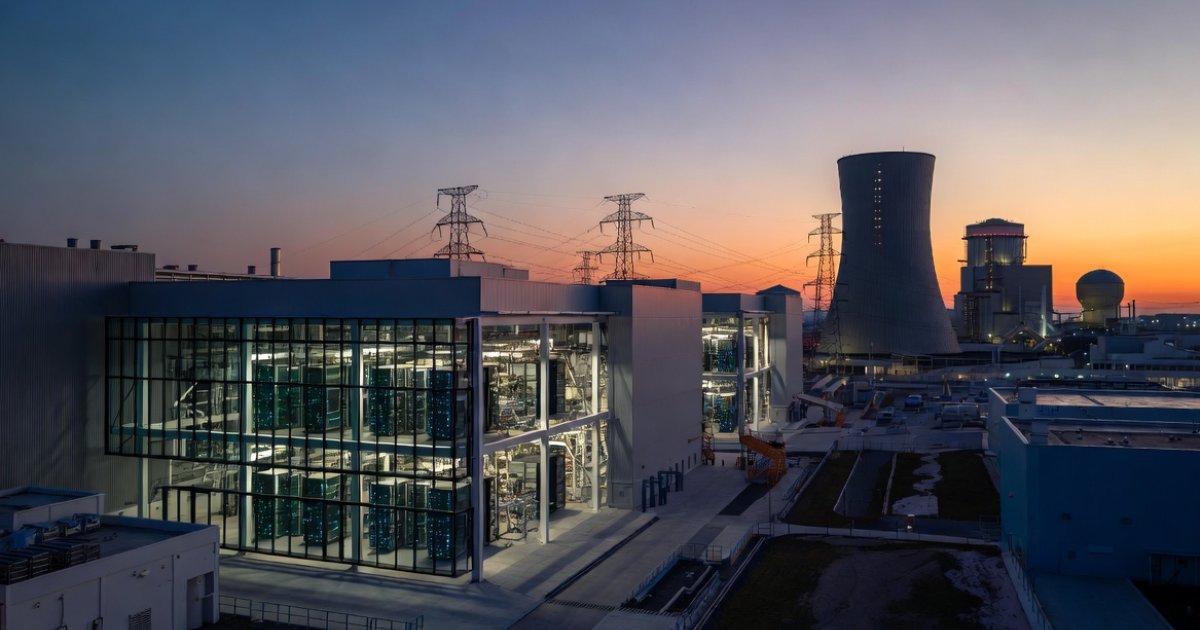
The artificial intelligence boom has turned electricity into the new strategic bottleneck for Big Tech. While GPUs, models, and algorithms dominate headlines, the physical constraint of reliable, high-density, carbon-free power is reshaping capital allocation, site selection, and long-term competitive positioning. Microsoft, Google (Alphabet), and Amazon (AWS) are no longer content to bid for grid power alongside everyone else. They are actively financing, contracting, and co-locating with nuclear assets at unprecedented scale.
This is not greenwashing. It is a calculated response to structural supply-demand imbalance. Global data center electricity consumption stood at approximately 415 TWh in 2024 (about 1.5% of world electricity), according to the International Energy Agency (IEA). In the base case, it is projected to nearly double to around 945 TWh by 2030—slightly more than Japan’s entire current electricity consumption. AI-optimized “accelerated” servers are expected to drive much of the incremental load, with their electricity use growing at ~30% annually versus ~9% for conventional servers.
In the United States—the epicenter of hyperscale AI buildout—data centers already account for a disproportionate share of demand growth. Goldman Sachs Research has modeled scenarios in which U.S. data center power demand rises sharply, with capacity potentially reaching ~95 GW by 2030 (from lower bases earlier in the decade) and the sector’s share of total U.S. electricity climbing significantly. Natural gas currently supplies over 40% of U.S. data center power in many estimates, renewables around 24%, and nuclear a meaningful but still minority slice (roughly 15-20% in recent snapshots). The gap between exploding demand and available firm, 24/7 carbon-free supply is what is driving the nuclear pivot.
Nuclear offers what intermittent renewables plus storage struggle to deliver at the required scale and speed for AI clusters: high capacity factors (typically 90%+), dispatchable baseload, and energy density that supports co-location or behind-the-meter arrangements. These bypass congested transmission queues that are already delaying conventional data center projects. For companies with multi-year AI roadmaps and net-zero commitments, locking in predictable, low-carbon megawatts is a form of operational and reputational insurance.
Microsoft: The First-Mover Restart Play
Microsoft made the most headline-grabbing move. In September 2024, it signed a 20-year power purchase agreement (PPA) with Constellation Energy to restart Three Mile Island Unit 1 (now the Crane Clean Energy Center) in Pennsylvania. The 835 MW reactor—shut for economic reasons in 2019, unrelated to the 1979 incident at the adjacent unit—will supply Microsoft’s data centers with its full output once restarted.
Constellation estimates restart costs at around $1.6 billion. The U.S. Department of Energy provided a $1 billion loan in late 2025 to accelerate the project, with initial advances expected in early 2026. Target commercial operation has been discussed in the 2027–2028 window. Economic impact studies project the restart will support ~3,400 direct and indirect jobs and generate more than $3 billion in state and federal taxes, while adding substantial GDP to Pennsylvania.
From a finance perspective, the 20-year tenor is notable—longer than typical renewable PPAs—and reflects the scale and reliability AI workloads demand. Microsoft gains contracted access to firm, carbon-free power at a time when spot or short-term procurement risks both price volatility and grid-constraint delays. For Constellation, the creditworthy offtake de-risks the restart economics dramatically. Nuclear restarts are generally faster and lower-capex than greenfield builds, giving Microsoft a relative speed advantage in the near term (late 2020s power).
Google: Betting on SMR Fleets for Scale and Timeline Flexibility
Google has taken a technology-development approach alongside procurement. In 2024–2025, it announced a landmark agreement with Kairos Power for up to 500 MW from a fleet of small modular reactors (SMRs)—potentially six to seven units. The first unit (around 50 MW) targets online status around 2030, with the fleet ramping through 2035. Some deployments involve the Tennessee Valley Authority (TVA) grid, supplying Google data centers in the Southeast (Tennessee and Alabama regions).
SMRs promise factory fabrication, shorter construction timelines than traditional large reactors, enhanced safety features in some designs (e.g., Kairos’ molten-salt, pebble-bed approach), and the ability to scale incrementally or co-locate. Google’s structure appears to allocate first-of-a-kind technology and construction risk appropriately while providing the revenue certainty developers need. This is not just buying power; it is helping de-risk and accelerate an entire technology class that could become critical for the 2030s and beyond.
Additional Google activity includes exploration of restarts (e.g., discussions around Duane Arnold in Iowa) and site preparation work. The strategy blends near-to-medium term procurement with longer-term supply chain and technology bets.
Amazon: Co-Location Scale Plus SMR Optionality
Amazon has executed perhaps the largest single-site nuclear-linked commitment. AWS acquired Talen Energy’s Cumulus data center campus (adjacent to the 2.5 GW Susquehanna nuclear plant in Pennsylvania) for $650 million. It has since expanded the relationship dramatically.
In mid-2025, Talen and AWS signed an expanded PPA under which Talen will supply up to 1,920 MW (1.92 GW) of nuclear power from Susquehanna to AWS data centers through 2042 (with extension options). Deliveries ramp: roughly 840–1,200 MW by 2029 and full volume by 2032 in accelerated scenarios. Talen has indicated the contract could generate around $18 billion in revenue over its life at full quantity, with meaningful impacts on its cash flows and valuation. AWS has also signaled over $20 billion in broader investment to develop the Pennsylvania site into a major AI-ready data center campus powered by carbon-free nuclear energy.
Complementing the large existing-plant strategy, Amazon is investing directly in next-generation technology. It has put more than $500 million into X-energy (SMR developer focused on high-assay low-enriched uranium/HALEU fuel) and struck deals with Energy Northwest (Washington state, multiple X-energy SMRs with initial phases targeting hundreds of MW) and Dominion Energy (Virginia, near existing North Anna nuclear infrastructure). This dual track—maximizing output from operating nuclear assets today while seeding SMR supply for the 2030s—gives Amazon significant optionality and scale.
Collectively, Microsoft, Google, Amazon, and others (including Meta’s GW-scale RFPs) have contracted or signaled interest in well over 10 GW of new or restarted nuclear capacity in the U.S. over a relatively short period.
The Analytical Reality Check: Scale, Economics, and the Gap
These deals are strategically significant but represent only a fraction of the projected need. Goldman Sachs has estimated that meeting the full data center power demand growth by 2030 could require on the order of 85–90 GW of new nuclear capacity globally—far more than is currently in advanced development or restart pipelines. Less than 10% of that may realistically be available by 2030.
Economics favor nuclear under specific conditions. Overnight capital costs for new nuclear are typically cited in the $6,000–$12,000+/kW range (highly sensitive to project specifics, location, and financing), compared with recent combined-cycle gas turbine (CCGT) figures that have inflated to $2,000+/kW or more due to supply-chain and labor pressures. Nuclear’s levelized cost of electricity (LCOE) benefits enormously from high capacity factors (~90%+), low and stable fuel costs, and long asset life. However, high upfront capex and long lead times make it sensitive to discount rates and financing costs. PPAs with investment-grade offtakers like the hyperscalers materially improve project economics by reducing revenue risk.
For the tech companies, these are often structured as long-term power contracts rather than direct ownership capex—effectively converting a volatile operating expense and supply risk into a more predictable, contracted cost. In an environment of rising electricity prices, transmission bottlenecks, and ESG scrutiny on Scope 2 emissions, this has clear strategic value. It also supports faster data center deployment in power-constrained regions.
Timelines remain the critical variable. AI demand is surging now and through the late 2020s. Even the fastest restarts (TMI) target the late 2020s; new SMRs are mostly early-to-mid 2030s at best. A meaningful bridge of natural gas, additional renewables + storage/flexibility, demand-side efficiency, and grid upgrades will be required. Historical nuclear projects have frequently seen cost and schedule overruns; even with policy support (including 2025 executive actions accelerating licensing), execution risk is material.
Other risks include HALEU fuel supply chain bottlenecks for many advanced designs, skilled labor shortages, supply-chain constraints for components, and residual public/regulatory perception issues—though political tailwinds for nuclear have strengthened.
Strategic and Market Implications
For hyperscalers, power strategy is becoming a core competency alongside chip design and model development. Companies that secure reliable, affordable, low-carbon megawatts at scale will have an edge in deploying next-generation AI infrastructure without multi-year delays. This could influence relative valuations and capital allocation efficiency in the AI race.
For the energy sector, these deals are transformative. They provide the long-term contracted cash flows needed to revive nuclear supply chains, restart idled assets, and finance first-of-a-kind SMR projects. Utilities and independent power producers with nuclear exposure (Constellation, Talen, etc.) have seen tangible financial benefits. A broader ecosystem—project finance, EPC contractors, fuel cycle companies, and SMR vendors—is gaining momentum.
Policy support matters. Accelerated licensing pathways, loan programs, and clean energy tax credits improve the risk-reward for developers. Co-location and “bring-your-own-power” models are challenging traditional utility paradigms in some markets.
Longer term, successful SMR deployment at scale could change the cost and deployment curve for nuclear, making it more competitive for industrial and data center loads globally. Fusion remains further out but is also attracting tech interest (e.g., Microsoft-Helion discussions).
Outlook: Necessary but Not Sufficient
Big Tech’s nuclear moves are rational, high-conviction responses to a real constraint. They demonstrate willingness to use balance-sheet strength and long-term contracting to solve a problem that pure market or traditional utility responses have been slow to address. The deals de-risk projects for developers while giving tech companies a measure of control over a critical input.
Yet they are not a panacea. The gigawatts contracted so far are meaningful but modest relative to the multi-hundred TWh demand surge projected. Timelines mean continued reliance on a diversified portfolio—gas for flexibility, renewables for volume and cost in suitable locations, efficiency gains, and yes, more nuclear as it comes online.
Investors and strategists should watch execution milestones closely: TMI restart progress and actual online date; Kairos and other SMR licensing/construction advances; Amazon’s Susquehanna ramp and additional SMR deployments; and any follow-on deals or ownership structures. Uranium and HALEU markets, nuclear supply chain capacity, and regional grid/transmission developments will also be key indicators.
The race to power AI is no longer just about who builds the biggest clusters or trains the smartest models. It is increasingly about who secures the electrons—reliably, affordably, and cleanly—over the next decade and beyond. Microsoft, Google, and Amazon have placed early, substantial bets on nuclear as a core part of that solution. The coming years will reveal how well those bets pay off in both megawatts delivered and competitive advantage secured.
References
Constellation Energy. (2024, September 20). Constellation to launch Crane Clean Energy Center, restoring jobs and carbon-free power to the grid [Press release]. https://www.constellationenergy.com/news/2024/Constellation-to-Launch-Crane-Clean-Energy-Center-Restoring-Jobs-and-Carbon-Free-Power-to-The-Grid.html
Goldman Sachs Research. (2024–2025). AI, data centers and the coming U.S. power demand surge (and related updates). Goldman Sachs.
International Energy Agency. (2025). Energy and AI. https://www.iea.org/reports/energy-and-ai
Introl. (2026, January 8). Nuclear power for AI: Inside the data center energy deals. https://introl.com/blog/nuclear-power-ai-data-centers-microsoft-google-amazon-2025
Talen Energy. (2025, June). Talen Energy expands nuclear energy relationship with Amazon [Press release and investor materials]. https://ir.talenenergy.com/
Various contemporaneous reporting from Reuters, Utility Dive, Data Center Dynamics, and company announcements regarding specific PPAs, SMR agreements (Kairos Power, X-energy, Energy Northwest, Dominion), and capacity figures (2024–2026). Specific deal parameters cross-verified across multiple sources for consistency.