🌐 Macro · June 5, 2026
Iran-Gulf Tensions and Regional Capital Flows: What Investors Should Watch
The fragile ceasefire that took hold in April 2026 after weeks of direct U.S.-Israeli strikes on Iran and Iranian retaliatory missile and drone attacks on Gulf energy and logistics infrastructure has not restored pre-crisis normality.
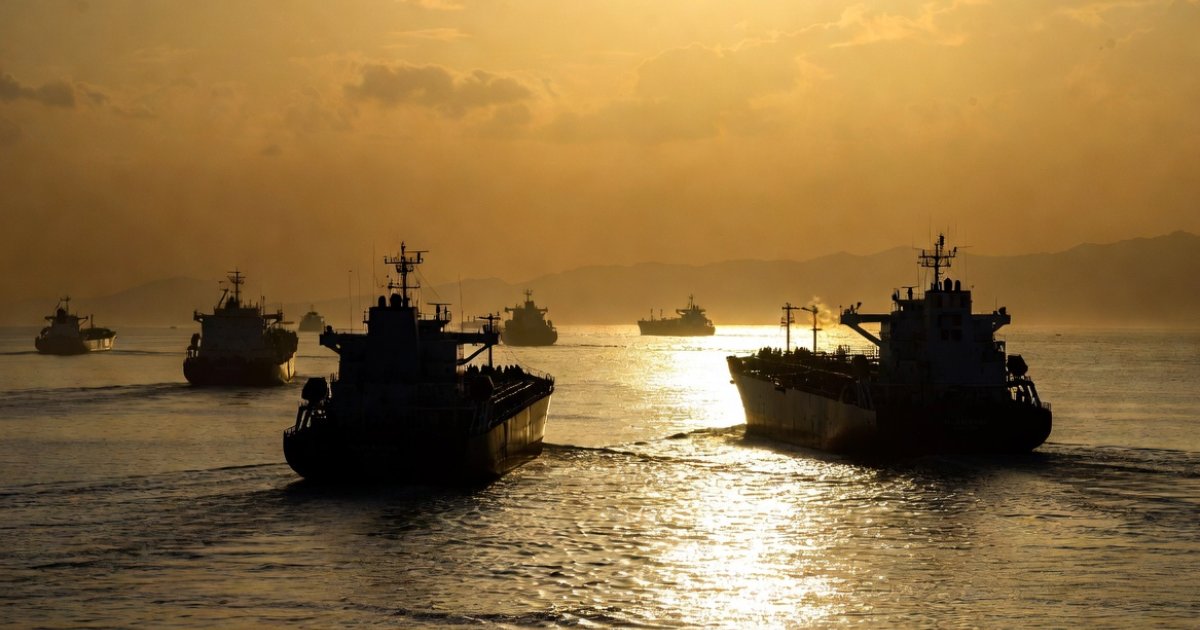
The fragile ceasefire that took hold in April 2026 after weeks of direct U.S.-Israeli strikes on Iran and Iranian retaliatory missile and drone attacks on Gulf energy and logistics infrastructure has not restored pre-crisis normality. As of early June, peace talks between Washington and Tehran remain stalled, and the Strait of Hormuz — through which approximately 20–21 million barrels per day (mb/d) of oil and condensate flowed in the first half of 2025, representing roughly 20% of global petroleum consumption and 25% of seaborne oil trade — continues to see severely restricted non-Iranian traffic.
This is not merely another geopolitical flare-up. It represents a direct stress test of the Gulf Cooperation Council’s (GCC) economic model, its role as a global capital recycler, and the durability of its “safe haven” narrative for investors. The conflict has produced the largest short-term disruption to global oil supplies in modern history, triggered sharp revisions to growth forecasts, inflicted tens of billions in infrastructure damage, and forced a rapid reallocation of sovereign capital from international markets toward domestic reconstruction and defense. For investors, the key question is no longer whether the region offers attractive yields or diversification, but how the interruption to capital flows and the repricing of regional risk will reshape portfolios over the medium term.
The Scale of the Shock
Pre-conflict, the six GCC economies were on a trajectory of non-oil diversification, strong FDI inflows, and substantial current-account surpluses that funded roughly $150 billion in annual incremental global investment capacity (even after the surplus narrowed to 4.6% of collective GDP in 2025 from 15.7% in 2022). In 2025 alone, the region attracted $334 billion in net capital inflows from non-residents through FDI, portfolio equity, and debt.
The conflict that began with strikes on 28 February 2026 changed the calculus almost overnight. Iranian forces closed the Strait of Hormuz on 4 March. Oil prices surged from around $72 to peaks above $112 per barrel (a >55% increase at one point), with Brent briefly trading near or above $120. Production across affected GCC states was cut by at least 10 mb/d at the peak. Kuwait’s output fell more than one-third (from 1.27 mb/d to ~0.8 mb/d); Saudi Arabia redirected volumes and cut output by around 10%. Qatar declared force majeure on LNG exports after strikes on Ras Laffan facilities.
The International Monetary Fund’s April 2026 World Economic Outlook delivered brutal downgrades for 2026 GDP growth: Qatar −14.7%, Kuwait −4.2%, Bahrain −3.8%, UAE −1.9%, Saudi Arabia −1.4%. Cumulative output losses across the Gulf are projected at around 7% over five years, with effects lingering for a decade. The World Bank slashed its regional growth outlook from above 4.4% to around 1.3%. Oxford Economics and others flagged recession risks for multiple economies in the second half of the year.
Direct damage is material. Estimates put repair costs for over 80 energy facilities at ~$58 billion (IEA/Rystad), with broader infrastructure, tourism, aviation, and logistics losses pushing the total toward $200 billion. Key assets hit included Ras Tanura and Ruwais refineries, Habshan gas complex, Fujairah facilities, Ras Laffan LNG/GTL infrastructure (repairs potentially taking 3–5 years), and aluminum smelters representing ~9% of global primary aluminum supply. Tourism — a pillar of diversification — collapsed: Dubai hotel occupancy fell from 81% to 23% in mid-March; arrivals dropped 20–35% across the region.
Capital Flows Under Pressure: The Damaged “Gulf Put”
The most consequential shift for global investors is the interruption of the “Gulf put” — the reliable flow of petrodollar capital into international assets. GCC public overseas assets stood at approximately $4 trillion in 2025 (reserves plus sovereign wealth funds). The six largest SWFs — ADIA ($1.1 trillion), PIF ($1.15 trillion), QIA ($550–600 billion), Mubadala ($385 billion), KIA (~$1 trillion), and others — collectively manage north of $4–5 trillion.
Historically, these vehicles, alongside central bank reserves, recycled current-account surpluses into U.S. Treasuries, private equity, infrastructure, sports assets, luxury real estate, and technology. That marginal buying power is now curtailed. In stressed scenarios with prolonged Hormuz disruption, analysts estimate annual outflows could fall by one-third or more (potentially to ~$245 billion in a lower-surplus environment). Several funds have already signaled or executed shifts: reduced global allocation targets (one reported move from 30% to 20% overseas), focus on domestic reconstruction and defense, and selective shedding of non-core international positions.
FDI, previously a bright spot (GCC inflows reached a record $74 billion in 2024, +10% year-on-year, with the UAE ranking among global leaders), now faces headwinds. Geopolitical tension and conflict ranked as the top risk to GCC FDI attractiveness in investor surveys, cited by 39% of respondents. Greenfield project announcements slowed, and the reputational damage to the region’s stability narrative will take longer to repair than physical infrastructure.
Domestic liquidity support has been aggressive — the UAE central bank injected $8.2 billion into the banking system, Dubai unveiled a $272 million stimulus package, and multiple governments issued or reopened bonds while extending currency swaps and regulatory forbearance. These measures have prevented immediate financial collapse but highlight the redirection of capital inward.
Equity markets reflected the decoupling: rising oil prices no longer automatically supported GCC equities when the region itself was under direct threat (as noted in MSCI analysis). Credit spreads widened modestly, sukuk and bond issuance slowed from early-2026 momentum, and insurance premiums for aviation and shipping spiked dramatically.
What Investors Should Watch
In this environment, passive exposure to the region or broad “EM energy” baskets carries elevated tail risk. Active monitoring of the following indicators will separate signal from noise:
-
Energy and Chokepoint Metrics
Brent and WTI price paths, OVX volatility index, actual tanker transits and insurance premia through the Strait of Hormuz (data from IEA, Kpler, and maritime agencies), and utilization of bypass options (e.g., Saudi East-West pipeline to Yanbu, other expansions). Sustained restrictions above 10–15 mb/d lost volume will keep risk premia elevated. -
Policy and Allocation Signals from Sovereigns and SWFs
Announcements from PIF, ADIA, QIA, and Mubadala on domestic vs. international deployment, new defense-focused vehicles (UAE has signaled interest), and any revisions to Vision 2030 or equivalent diversification timelines. Large drawdowns on FX reserves or SWF liquidity for reconstruction would be a yellow flag. -
Capital Flow Proxies
National FDI and portfolio flow statistics (UNCTAD, central bank data), cross-border banking claims (BIS locational statistics), sukuk/bond issuance volumes and spreads, and EPFR-style equity/debt flow data for MENA/GCC funds. A sustained 20–25%+ drop in net inflows would confirm structural repricing. -
Risk Premia and Market Functioning
Sovereign and major bank CDS spreads (Saudi, UAE, Qatar 5-year), Tadawul and DFM performance relative to oil and global EM benchmarks, and regional equity risk premia. Widening or persistent elevation signals higher required returns for new capital. -
Reconstruction and Diversification Pipelines
Tender activity and contract awards in energy repair, defense, infrastructure, renewables, AI, and financial services. UAE and Saudi shifts toward “internal investment” plus green/tech could create selective opportunities even as broad inflows slow. -
Global Spillovers
LNG and fertilizer price transmission to Asia and Europe, safe-haven flows into U.S. Treasuries or gold, and any signs of capital repatriation from Gulf SWFs affecting specific asset classes (private equity mid-market, trophy real estate, etc.).
Scenarios and Positioning Implications
Base case (most likely near-term): Fragile ceasefire holds with gradual, partial Hormuz normalization over months. Oil prices moderate but remain above pre-crisis levels. GCC growth contracts or stagnates in 2026 before modest recovery; SWFs prioritize domestic needs but retain selective global capacity. Result: higher structural risk premium for regional assets, selective opportunities in reconstruction/defense/greenfield projects, and continued caution on broad EM or energy-beta exposure.
Upside: Credible diplomatic breakthrough, full Hormuz reopening, and sanctions relief or easing. FDI and SWF global flows rebound faster; diversification agendas accelerate with lower political risk. Attractive entry points for long-term GCC exposure.
Downside: Renewed escalation or prolonged Hormuz closure. Deeper recessions, larger SWF drawdowns, capital flight or forced asset sales, and significantly higher global energy inflation. Defensive positioning in safe-haven assets and strict avoidance of direct regional beta would be warranted.
Investors with existing GCC exposure should stress-test portfolios for 20–30%+ downside in equities and wider credit spreads under prolonged disruption scenarios, while watching for asymmetric opportunities in domestic-focused or reconstruction plays that benefit from sovereign spending.
Conclusion
The 2026 Iran-Gulf conflict has not ended the Gulf’s economic story, but it has fundamentally altered its chapter. Large fiscal and SWF buffers provide genuine resilience — far more than most emerging markets possess — yet the combination of physical damage, reputational scarring, and the forced redirection of capital has interrupted the reliable recycling of petrodollars that global markets had come to expect. The “Gulf put” is damaged, not destroyed, but its reliability is now conditional on de-escalation and successful reconstruction.
For professional investors, the region has shifted from a high-conviction growth-and-yield story to a geopolitical-risk and selective-opportunity story. Those who treat it as the former without rigorous monitoring of the indicators above are likely to be disappointed. Those who track the data, distinguish between domestic buffers and external flows, and position for a higher and more variable risk premium will be better placed to navigate what comes next.
References
International Monetary Fund. (2026, April). World Economic Outlook, April 2026: Global economy in flux. IMF. https://www.imf.org/en/publications/weo/issues/2026/04/14/world-economic-outlook-april-2026
U.S. Energy Information Administration. (2025). World oil transit chokepoints. EIA. https://www.eia.gov/international/analysis/special-topics/world_oil_transit_Chokepoints
Reuters. (2026, May 27). Iran war deals blow to global markets’ ‘Gulf put’. Reuters Breakingviews.
Stimson Center. (2026, May 12). Iran conflict hits foundations of Gulf economies. https://www.stimson.org/2026/iran-conflict-hits-foundations-of-gulf-economies/
Atlantic Council. (2026, May 19). After the Iran war, the Gulf’s next economic phase awaits. MENASource.
Oxford Economics. (2026, March). Iran war set to push GCC economies into recession. https://www.oxfordeconomics.com/resource/iran-war-set-to-push-gcc-economies-into-recession/
MSCI. (2026, March 27). Iran war breaks link between oil prices and GCC markets. MSCI Research.
UNCTAD. (2025). World Investment Report 2025. United Nations.
IEA. (2026, March). Oil Market Report – March 2026. International Energy Agency.
Wood Mackenzie. (2026). Analysis on Middle East conflict and energy prices (various reports).
Additional data drawn from Bloomberg, Fitch Ratings, S&P Global, and national central bank/government statistical releases (UAE, Saudi GASTAT, etc.) as referenced in the above analyses. All figures are best available estimates as of May–June 2026 reporting and subject to revision as more complete data emerges.