🏛️ Politics · June 13, 2026
US-Iran Deal Hopes Signal Potential Supply Rebound as Hormuz Tensions Ease
As of mid-June 2026, the United States and Iran are signaling that a framework agreement to end months of direct conflict is close, raising prospects for the reopening of the Strait of Hormuz and a significant easing of one of the most severe energy supply shocks in recent years.
As of mid-June 2026, the United States and Iran are signaling that a framework agreement to end months of direct conflict is close, raising prospects for the reopening of the Strait of Hormuz and a significant easing of one of the most severe energy supply shocks in recent years. While recent incidents—including U.S. forces downing Iranian drones near the strait—highlight lingering risks, oil markets have already begun pricing in de-escalation. Brent crude has retreated from peaks near or above $93–97 per barrel to settle in the mid-to-high $80s (with intraday moves below $85 in recent sessions), and U.S. WTI has similarly eased toward $84–86.
This movement reflects not only diplomatic momentum but also the surprising resilience of global oil balances despite a prolonged disruption. For investors and policymakers, the episode underscores both the potency of geopolitical risk premiums and the offsetting forces—weak demand, surging non-OPEC supply, and logistical workarounds—that have prevented a full-blown price spike.
The Strait of Hormuz: A Critical Chokepoint Under Pressure
The Strait of Hormuz remains the world’s most important oil transit route. In normal times, it handles approximately 20 million barrels per day (mb/d) of crude oil, condensates, and petroleum products—roughly 20% of global petroleum liquids consumption and about one-fifth of seaborne oil trade.
Saudi Arabia typically accounts for the largest share of flows through the strait (around 37–38%), followed by Iraq, the UAE, Iran, and Kuwait. China is by far the largest destination, receiving roughly 38% of Hormuz-transiting crude in recent patterns, with other major Asian importers (India, South Korea, Japan) also heavily exposed.
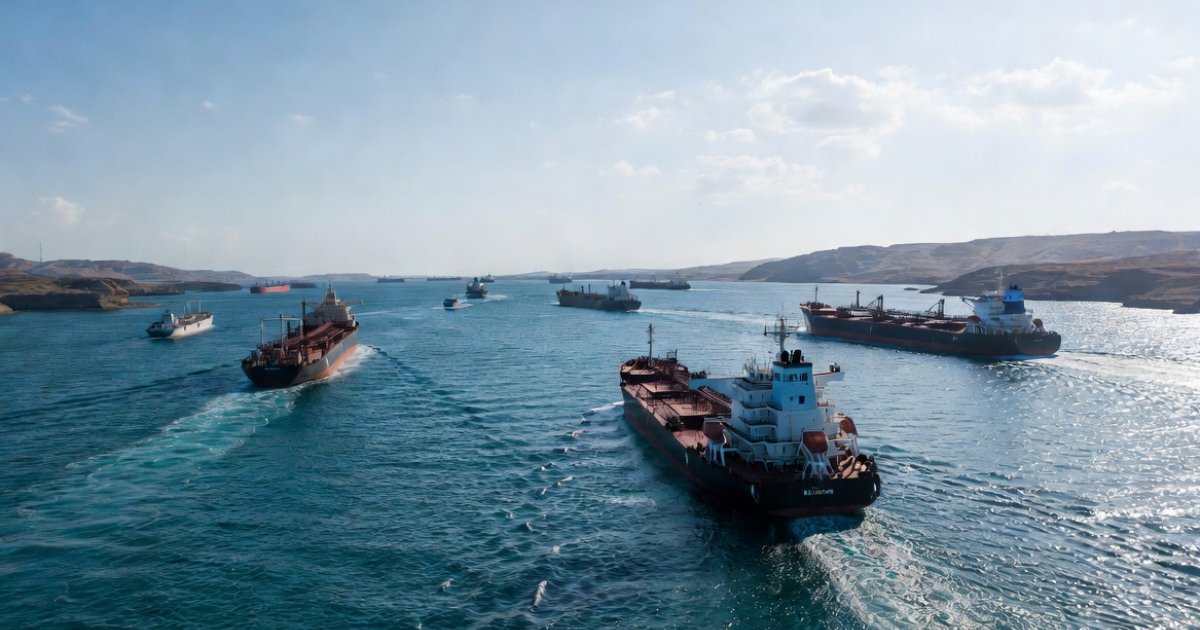
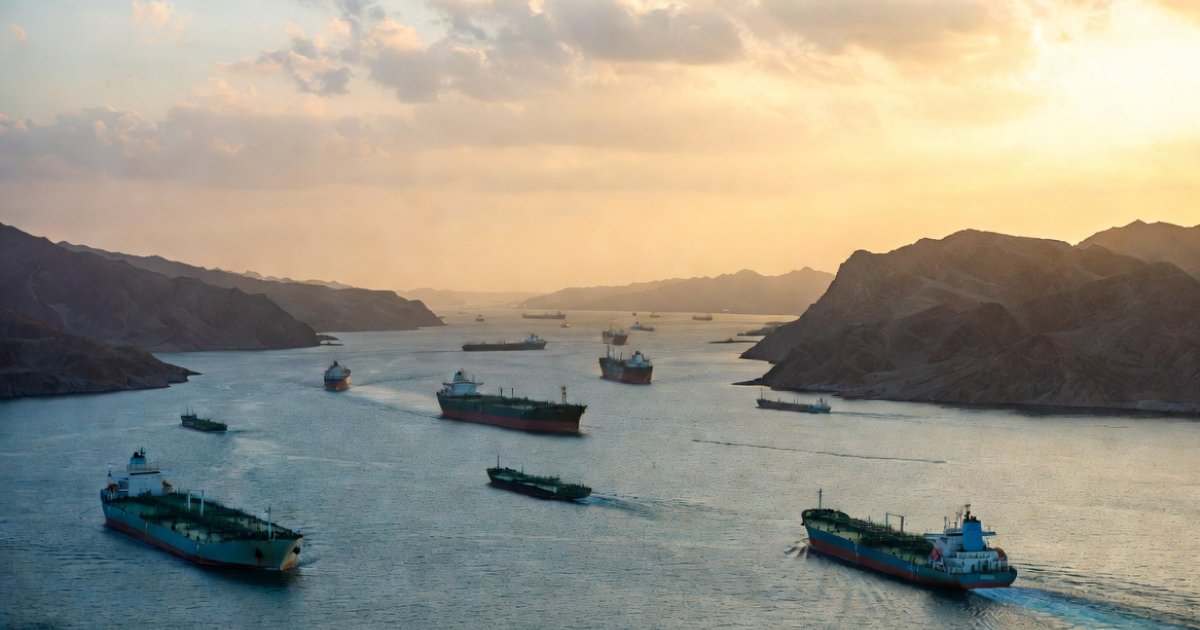
Since the escalation of U.S.-Iran hostilities beginning in late February 2026, traffic has collapsed. Independent tracking and official assessments indicate flows have fallen to a small fraction of normal levels at times (reports of ~1 mb/d or less in peak disruption periods), with hundreds of vessels waiting and war-risk insurance premiums spiking (reported as high as 4% in some cases). The U.S. has maintained a naval presence and blockade elements on Iranian shipping, while Iran has threatened closure and related actions. Partial mitigation has come via U.S. naval escorts for some tankers, Saudi and other bypass pipelines, and rerouting, but the net effect has been severe.
Scale of the Supply Shock and Market Offsets
The disruption has led to substantial production shut-ins. The U.S. Energy Information Administration (EIA) assessed Middle East production shut-ins averaging 11.3 mb/d in May 2026, with expectations of further increases as storage constraints bite, particularly in Iran. The International Energy Agency (IEA) estimated cumulative global supply losses of around 12.8 mb/d since February and projected a 3.9 mb/d average decline in global oil supply for 2026 overall.
Iran’s own output has suffered. Pre-conflict levels were in the 3.0–3.6 mb/d range (with exports historically 1.5–2.0 mb/d, predominantly to China via shadow fleet and discounted sales). By April 2026, Iranian crude production had fallen to approximately 2.85–3.06 mb/d, with further declines reported into May and loadings at Iranian terminals collapsing to around 640,000 b/d.
Yet oil prices have not exploded to crisis levels (e.g., sustained $110–150+). Several powerful offsets have contained the damage:
- Demand weakness, especially in China, has absorbed some of the shock.
- Non-OPEC supply strength, led by record U.S. output (near 13.6 mb/d) and exports (reaching 10.5 mb/d in recent data, with crude alone at record levels).
- Inventory draws and Strategic Petroleum Reserve releases.
- Logistical flexibility (bypass pipelines, partial escorts, and some Hormuz traffic resuming under protection).
- OPEC+ dynamics and pre-existing market balances.
Energy commentator Javier Blas has highlighted these factors in recent analysis, noting elements such as China’s demand picture, demand destruction elsewhere, volumes bypassing or leaving the strait via alternatives, original oversupply conditions, stock draws, refinery flexibility, and strong Americas output as reasons prices have stayed below $100 despite the crisis.
Markets have also shown classic risk-on responses to de-escalation headlines: equities rallying (e.g., sharp Dow gains on positive signals), oil selling off, and some softening in the dollar and gold.
Diplomatic Framework and Key Terms
Reports indicate negotiators have advanced a memorandum of understanding (MOU) or framework, mediated in part through Pakistan and Qatar, that could extend the ceasefire, facilitate Hormuz reopening, and launch 30–60 days of follow-on talks. Core elements discussed include:
- Immediate or phased end to hostilities and lifting of the U.S. naval blockade in proportion to restored commercial shipping.
- Unrestricted navigation through the Strait of Hormuz (no tolls or harassment; Iran to clear mines within ~30 days).
- Sanctions waivers or relief to allow Iran to sell oil more freely.
- Commitments on Iran’s nuclear program: non-pursuit of weapons, addressing the stockpile of highly enriched uranium (previously reported in the hundreds of kg at 60% purity levels in earlier assessments), potential downblending or disposal under IAEA supervision, and parameters for future enrichment talks (possibly including consortium-style arrangements).
President Trump has expressed optimism about an imminent signing, while Iranian officials have described an agreement as “never been closer” even as some statements caution that details remain under discussion and certain leaked terms do not reflect the actual text.
The JCPOA framework expired in late 2025 amid prior non-compliance findings and snapback mechanisms; any new arrangement would operate in that post-JCPOA context with heightened verification demands.
Forward Scenarios and Financial Implications
Base case (framework holds and is implemented): Hormuz traffic normalizes toward 20 mb/d over weeks to months, Iranian exports begin recovering toward pre-conflict levels (and potentially higher with sanctions relief and production rebound), and the war-risk premium dissipates. Combined with soft global demand and strong non-OPEC supply, this could pressure Brent toward the mid-to-high $70s or low $80s in the near term, providing meaningful relief to importers. Lower energy costs would support disinflation and growth in Asia and Europe, while U.S. producers benefit from volume even at moderated prices. Equities and risk assets would likely extend recent gains.
Bull case (escalation or deal failure): Renewed strikes, effective closure, or verification breakdowns could push prices sharply higher ($100–120+), with stagflationary risks for oil-importing economies and upward pressure on inflation expectations. Shipping and insurance costs would remain elevated.
Bear case (rapid resolution + macro weakness): Faster-than-expected supply recovery plus persistent demand softness (China, global slowdown) could drive prices toward $70 or below, pressuring upstream margins but benefiting consumers and downstream sectors.
For portfolios, the environment favors caution on concentrated upstream energy exposure if supply rebounds strongly, while presenting opportunities in sectors that benefit from lower input costs or normalized logistics. Gold and volatility products may see reduced demand in a sustained de-escalation. Iran’s economy—highly dependent on oil revenues (historically a large share of exports and budget)—would gain critical breathing room from higher realized prices and volumes, though structural sanctions and investment challenges would persist.
Risks and What to Watch
The situation remains fluid. Key monitors include: concrete steps on mine clearance and shipping resumption in Hormuz; details and IAEA involvement on uranium stockpile management; any escalation involving proxies or additional strikes; Chinese buying patterns and inventory rebuilding; and OPEC+ responses. Implementation risks are high given the history of mistrust and technical complexities around nuclear verification.
In summary, the emerging diplomatic window offers the clearest path in months to alleviating a major energy supply constraint. Markets are already reflecting measured relief, supported by the very real offsets that have contained price damage thus far. However, the nuclear dimension and enforcement challenges mean this is a high-stakes inflection point rather than a guaranteed resolution. Prudent observers will treat recent price moves as the opening act, not the finale.
References
Blas, J. [@JavierBlas]. (2026, June 13). FREE TO READ: The top-10 reasons why oil prices are below $100 a barrel [Post]. X. https://x.com/JavierBlas/status/...
Energy Information Administration. (2025, June 16). Amid regional conflict, the Strait of Hormuz remains critical to global oil markets. https://www.eia.gov/todayinenergy/detail.php?id=65504
Energy Information Administration. (2026). Short-term energy outlook: Global oil markets. https://www.eia.gov/outlooks/steo/report/global_oil.php
International Energy Agency. (2026, May 13). Oil market report – May 2026. https://www.iea.org/reports/oil-market-report-may-2026
Reuters. (2026, June 12). Iran peace deal looms while new military action flares near Strait of Hormuz. https://www.reuters.com/world/asia-pacific/iran-peace-deal-looms-while-new-military-action-flares-near-strait-hormuz-2026-06-13/
Reuters. (2026, June 12). U.S., Iran signal peace deal near as Tehran claims victory. https://www.reuters.com/world/middle-east/trump-says-iran-war-deal-close-strait-hormuz-tensions-linger-2026-06-12/
Wall Street Journal. (2026, various dates). Coverage of oil price movements and U.S.-Iran developments (e.g., oil settles lower on deal hopes).
Additional supporting data drawn from Kpler shipping analytics, OPEC Monthly Oil Market Reports, and contemporaneous reporting in Axios, The New York Times, and Bloomberg on production figures, shut-ins, and diplomatic drafts (May–June 2026). Specific numerical estimates (e.g., shut-in volumes, flows) reflect agency and industry tracker consensus as reported in the cited periods.