
Skip to content

Financial news + insight

All news

Courts must not rely solely on nikahnama in marriage disputes: LHC
GeneralJuly 4, 2026

Courts must not rely solely on nikahnama in marriage disputes: LHC

LAHORE: The Lahore High Court (LHC) has ruled that in disputes involving alleged love marriages and claims of abduction or forced marriage, courts must examine the entire chain of surrounding circumstances instead of relying solely on documentary evidence such as a nikahnama (marriage certificate). In a judgement authored by Justice Anwaar Hussain, the LHC dismissed a petition filed by Muhammad Jamil challenging an appellate court decree in favour of a woman who had sought a decree of jactitation of marriage (takzeeb-i-nikah), maintaining that she had been abducted and forced into marriage against her will. The judge framed the principal legal question as: “What is the correct approach for a court while appreciating evidence in cases where an alleged love marriage is relied upon by one party and allegations of abduction, coercion or forced marriage are raised by the other?” According to the judgement, the woman filed a suit for jactitation of marriage, alleging that she had been abducted and compelled to contract marriage without her free consent. Notes free consent, surrounding circumstances key to deciding marriage cases The petitioner, however, contended that the parties had developed a consensual relationship, voluntarily eloped and entered into a love marriage. He also instituted a suit for restitution of conjugal rights, and both cases were consolidated for trial. The trial court dismissed the woman’s suit in 2023 after holding that the marriage had been proved through the production of a nikahnama. It also noted that the parties belonged to the same bradari (caste) and treated the dispute as one concerning the dissolution of marriage. However, the appellate court overturned that decision in 2025, ruling that the alleged marriage had not been proved to be the result of the woman’s free and voluntary consent. Upholding the appellate court’s verdict, Justice Hussain observed that although documents such as a registered nikahnama or even a harassment petition might initially lend credibility to a claim of marriage, they could not be regarded as conclusive where the very foundation of the marriage was challenged on the ground of lack of free consent. “The question whether consent was genuine, voluntary and free from any coercion must be examined in the light of the entire attending circumstances before and after the solemnisation of the purported nikah,” the judgement said. The judge noted that while the petitioner claimed the parties had developed a consensual relationship before marriage, the record contained no convincing evidence explaining how the relationship had begun. He observed that the parties belonged to different localities situated more than 100km apart and that merely belonging to the same bradari carried no legal significance. The judgement held that where the parties were complete strangers, courts were obliged to examine how the alleged relationship originated and ultimately developed into a decision to marry against the wishes of their families. Justice Hussain clarified that the law did not require parties to prove such a relationship through call records, social media conversations, photographs or other electronic communications. However, he added that the complete absence of any material explaining the genesis of the relationship remained a relevant circumstance in assessing the plea of a consensual love marriage. The judge observed that the woman’s conduct after the alleged marriage was also a relevant factor. Although she had earlier filed a harassment petition, he said such a petition could not, by itself, be treated as conclusive proof of a valid marriage. Justice Hussain further held that where a woman consistently maintained that no valid marriage had ever come into existence, a suit for jactitation of marriage could not ordinarily be converted into one seeking dissolution of marriage. Finding no jurisdictional defect, illegality or perversity in the appellate court’s judgement, the LHC dismissed the petition and upheld the decree in the respondent woman’s favour. Published in Dawn, July 4th, 2026


Dawn3 min read
UK in talks with Pakistan over deportation of Rochdale grooming gang leader: report
GeneralJuly 4, 2026

UK in talks with Pakistan over deportation of Rochdale grooming gang leader: report

The UK government is in talks with Pakistan over the possibility of deporting a leader of the Rochdale grooming gang to the country, the BBC reported on Friday. Shabbir Ahmed, who has dual British-Pakistani citizenship, was released from prison this week after his 2012 conviction on multiple counts of rape and sexual offences against girls. British officials told his victims that Ahmed could not be deported to Pakistan because of a 55-year-old law barring his removal. However, British Prime Minister Keir Starmer has asked the home secretary to review Ahmed’s case following calls for his deportation from the UK. The BBC reported that Andy Burnham, who is widely tipped as a future leader, was among those calling for Ahmed to be deported. “We have raised this issue with our counterparts in Islamabad and we are committed to doing everything possible to deport foreign national offenders, and we’re clear that they should have no place in this country,” said a spokesperson for the British premier’s office. “As previous governments have found, this necessarily involves the agreement of the receiving country - which has not always been possible - but we are currently working across government to explore all possible options in this case.” The prime minister’s spokesperson stated that the UK would “do everything in our power to remove” Ahmed, but added that it was “clearly a complex case with implications beyond this specific incident”. The BBC reported that Ahmed was released from prison on Thursday and is now residing in 24-hour staffed accommodation, where he is being monitored with an electronic GPS tag. The Home Office said any breach of his strict licence conditions would result in his immediate return to prison. Ahmed went to the UK in the late 1960s and held dual citizenship at the time of his conviction. The BBC reported that his British citizenship was revoked by the courts after he was jailed, and he was expected to be deported upon completion of his sentence. Earlier this week, victims of the grooming gang were informed that provisions of the Immigration Act 1971 barred the removal of any Commonwealth citizen who arrived in the UK before 1973 and had been resident in the country for at least five years, added the BBC report. Ahmed was sentenced to 22 years in prison in 2012, as one of nine men convicted in the Rochdale grooming gang trial of offences against children.

Dawn2 min read
Tibetan activist dies after self-immolation near UN HQ in New York
GeneralJuly 4, 2026

Tibetan activist dies after self-immolation near UN HQ in New York

WASHINGTON: Police in New York City said on Thursday a man died from severe burns near the United Nations headquarters, and activists and a media outlet of exiled Tibetans identified him as a Tibetan who set himself on fire in an appeal for independence. A New York City Police Department spokesman said police, responding to an emergency call made around 6:30pm ET (2230 GMT) on Thursday, found the man badly burned. He was taken to Bellevue Hospital where he was pronounced dead, police said, adding an investigation was ongoing. Police did not name the man and did not provide any potential motive for his action. Voice of Tibet, a media outlet of exiled Tibetans, said Tibetan activist Lobga Rangzen “self-immolated outside the UN headquarters in New York after a live appeal for Tibetan independence and unity”. He was an Uber driver, local news site amNewYork reported. The website quoted fellow Uber driver Lobsang Paljor as saying he knew Rangzen from gatherings in the Tibetan community. A spokesperson for UN Secretary-General Antonio Guterres said in a statement: “We are saddened by this tragic and horrific incident, and offer our condolences to his family.” Tencho Gyatso, president of the International Campaign for Tibet, said she was “deeply saddened” by his death. The International Campaign for Tibet says there were more than 150 self-immolations by Tibetans between 2009 and 2022. According to its data, 10 self-immolations by Tibetans have occurred while people were in exile. Published in Dawn, July 4th, 2026
Dawn1 min read
New ghost shark species may have been found in Costa Rica
GeneralJuly 4, 2026

New ghost shark species may have been found in Costa Rica

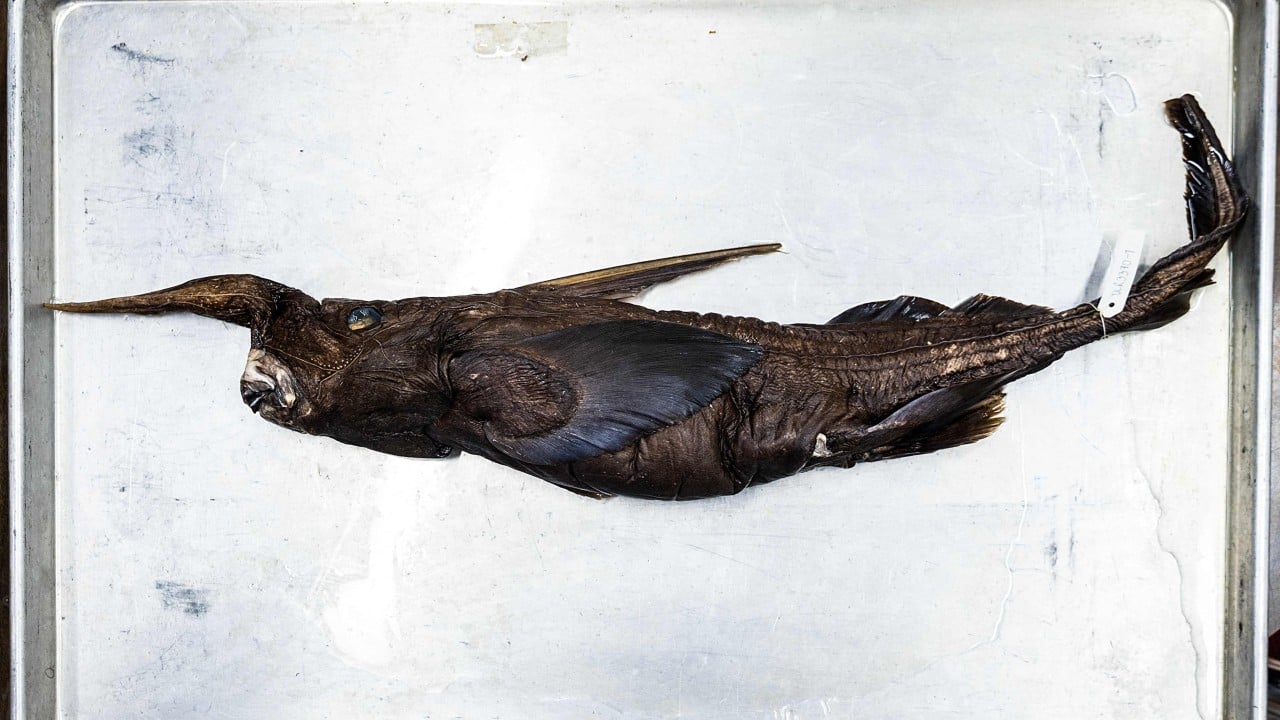
Costa Rican scientists may have discovered a new species of ghost shark in Pacific waters near Cabo Blanco and Cano Island. The latest discovery has a “shorter” snout, a “darker coloration pattern” and a “much longer spine on its dorsal fin”, according to Arturo Angulo Sibaja, a biology professor at the University of Costa Rica. The discovery marked the only such species “known for the Central American coast”, Sibaja said, adding genetic analysis indicated the new species had “no reproductive...

South China Morning Post1 min read